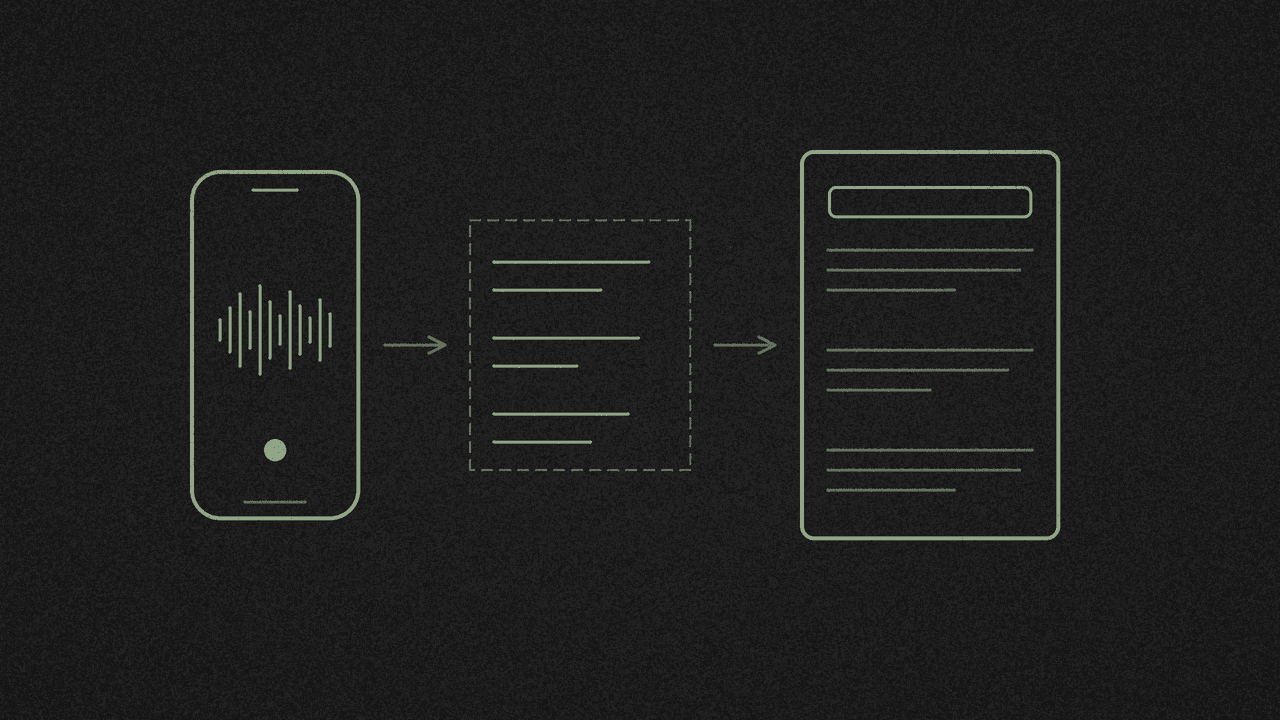
Fact-Check a Quote in a Viral X Clip Before You Repost It
Fact-check a viral X clip: find the exact caption line, then check the page the post links to. Searching '40%' missed a line that says 'forty'. Steps inside.

A clip goes round with a line attached to it. Before you repost it, find the exact words and the time they were said in the captions, then check that line against the page the account itself linked.
We tried this on 17 November with a 55-second World Diabetes Day clip posted by @WHO. The post text says "More than 40% of people living with #diabetes are not diagnosed." What we found:
- Searching "40" finds nothing. The post says 40%. The captions spell it "forty". In our X video transcriber, "40%" returned
No matches for "40%"and "40" found 0 lines. "forty" found the line at 0:02. - The page the post links to has the figure. The fact sheet doesn't. WHO's World Diabetes Day 2026 campaign page says "more than 40% of people living with diabetes across the globe are undiagnosed". WHO's general diabetes fact sheet, dated 11 November 2026, has no "40%" and no "undiagnosed". Open only the fact sheet and you'd think the line had no source.
- The clip's second figure is unverified. At 0:28 the captions say "up to fifty percent of people with type two diabetes already have developed complication by the time they're diagnosed". We couldn't find that figure on either WHO page we opened.
- Grok Bot caught a merged quote. We wrote a test quote that blends the two lines. Given the captions, Grok Bot found both real lines and listed four ways the wording changed the meaning. All four matched the captions.
- Copy and TXT drop the times. Download the SRT or VTT to keep each line's time next to the quote.
This post uses videos that already have X captions. It checks what a clip said. Whether the footage is real, or where it was filmed, needs other checks: Poynter's 10 tips for verifying viral social media videos and Bellingcat's beginner's guide to social media verification cover those.
Step 1: Get the captions
Copy the post link on X. Paste it into YOUR X LINK in the X video transcriber and press Pick every word. It's free and needs no shinmuscat account.
When the result loads, check the card says Original X captions. Ours read "0:55 · 139 words · English" and "24 segments · Captions extracted".
That label covers auto-generated and uploaded tracks alike. X's own playlist marks this clip's track en (auto-generated), and the card still just says Original X captions. Auto captions write what they hear, so a number can come out as a word.
If the video has no caption track, this method won't work on it.
Step 2: Search the word as it was captioned
Type into Find a word or phrase. Only matching lines stay on screen. Here's what we got on the WHO clip:
40%:No matches for "40%"40: 0 linesforty: 1 matching segment, at 0:02diagnosed: 2 matching segments, at 0:04 and 0:34complication: 1 matching segment, at 0:30
Search looks for your text inside one caption line, upper or lower case. So search a short, distinctive word the way the captions would spell it. If a number finds nothing, type it out in words.
Then keep Timestamps on and click the time next to a line. We clicked 0:02 and the video jumped there and played. We tested that on a desktop. We haven't tested it on a phone.
Step 3: Download the SRT
Open Download ▾ and pick SubRip subtitles .srt. Ours had 24 cues, each with a start and end time. Copy and Plain text .txt give you the words with no times. Every export gives you the whole transcript, whatever you typed in the search box.
One oddity on this clip: cue 15 starts at 00:00:28,487, which is 0.32 seconds before cue 14 ends. That overlap is in X's own caption track. The tool passes the times through as X has them.
Step 4: Ask a chat AI where the quote came from
We meant to use logged-out ChatGPT in a private window. On 17 November, at 14:04 and 14:11 Singapore time, it showed "Sign in to continue" and gave no answer. A logged-out run that morning, for a different post, had worked, so access can change from one session to the next.
So we ran the same prompt, word for word, in a fresh Grok Bot session with no other context and no web search. Use whichever chat AI you have. Open the SRT in a text editor, copy all of it, and paste it under the prompt.
shinmuscat has no AI built in. The captions leave your device only when you paste them into a chat AI.
The quote in the prompt is one we wrote for the test. It isn't a real post. This is the prompt, word for word:
Here is a timestamped transcript of a short official video, and a quote that is circulating as if it is what the video said.

Circulating quote (this is a test input we wrote, not a real post): "WHO: more than 40% of people with diabetes already have complications and haven't been diagnosed."

1. Find the exact line or lines in the transcript that this quote appears to be based on. Give the timestamp and quote each line word for word. If it isn't in the transcript, say so. Don't guess.
2. Say whether the circulating wording changes the meaning of what was said, and how.
3. List the checkable claims a person should verify against a primary WHO page (the numbers, who they apply to, and any wording that matters). Do not give a verdict from memory, and do not invent a source.

Transcript (SRT):
[paste the full SRT here; ours was 24 cues]
Swap in the quote you've seen and the account's name. Keep "Don't guess" and "do not invent a source". They tell the AI to admit a miss and stop it making up a link.
Here's what Grok Bot sent back, word for word:
**1. Where the quote comes from in the transcript**

The quote isn't in the transcript as one statement. It looks like two separate claims that have been joined together.

Claim A, about undiagnosed diabetes (cues 2-3):
- 00:00:02,401 → "More than forty percent of people living with"
- 00:00:04,421 → "diabetes are not diagnosed. So let's talk about the symptoms"

Claim B, about complications (cues 15-17):
- 00:00:28,487 → "up to fifty percent of people with type"
- 00:00:30,527 → "two diabetes already have developed complication"
- 00:00:34,108 → "by the time they're diagnosed"

No line in the transcript says that more than 40% of people with diabetes "already have complications and haven't been diagnosed." The transcript also never says who is speaking. The "WHO:" label comes from the circulating post, not from anything said in the video.

Small transcript notes: cue 16 says "complication" (singular), which is probably a captioning error for "complications." Cue 15 starts (00:00:28,487) before cue 14 ends (00:00:28,807). Neither one changes the meaning.

**2. Does the circulating wording change the meaning? Yes, in four ways.**

- **It merges two statistics into one.** The video gives "more than 40%" for *undiagnosed* diabetes and "up to 50%" for *complications*. The quote puts the 40% figure on both, so it now covers a group the video never measured: people who are undiagnosed *and* already have complications.
- **It drops the type 2 limit.** The complications figure in the video applies only to "people with type two diabetes." The quote says "people with diabetes," which also takes in type 1 and every other type.
- **It changes the timing.** The video says complications are already present "by the time they're diagnosed," so it's describing people at the point of diagnosis. The quote says people "already have complications and haven't been diagnosed," which describes the undiagnosed population right now. Those are different claims.
- **It changes the size of the figure.** "Up to fifty percent" is an upper bound. The quote replaces it with a different number ("more than 40%") and a different kind of bound ("more than," a floor). Separately, "more than forty percent" in the video applies to *all* people living with diabetes, not just type 2.

Overall, the quote turns two narrower claims into one broader claim that the video doesn't support. It also adds an attribution to WHO that the transcript itself doesn't show.

**3. Claims to check against a primary WHO page**

I'm not giving a verdict here and I'm not citing any source. These are the things to confirm on WHO's own page, such as an official WHO fact sheet or the WHO account and page where the video was originally posted:

1. **Source and attribution:** Did WHO actually publish this video? Check the original upload (official WHO account or website) and that the wording matches.
2. **Undiagnosed share:** Does WHO say that "more than 40%" (or a specific figure) of people living with diabetes are undiagnosed?
   - Is the figure for adults only, or for all ages?
   - Is it global, or for a particular region or income group?
   - What year is it, and what's the underlying data source?
   - Does it cover all diabetes or only type 2?
3. **Complications at diagnosis:** Does WHO say that "up to 50%" of people with **type 2** diabetes already have complications when they're diagnosed?
   - Is the wording "up to," "around," or "more than"?
   - Does it apply only to type 2?
   - Which complications count (e.g. eye, kidney, nerve, cardiovascular)?
   - Is the reference point the moment of diagnosis?
4. **Combined claim:** Does any WHO page give a figure for people who are *both* undiagnosed *and* already have complications? If none does, the circulating quote has no direct primary source.
5. **Symptom list (lower priority):** Check that the symptoms listed (constant thirst, frequent urination, unexplained tiredness, blurred vision) and the type 1 vs type 2 description (quick onset with unintentional weight loss vs slow onset or no symptoms) match WHO's wording.

If WHO's page gives the two figures separately, as the video does, the accurate way to quote it would be something like: "More than 40% of people living with diabetes are undiagnosed, and up to 50% of people with type 2 diabetes already have complications by the time they're diagnosed." Use whatever exact figures and wording the WHO page confirms.
Step 5: Check the AI's answer against the captions
We checked every line against the SRT.
- The two source passages were right. Cues 2 and 3, and cues 15 to 17, with start times to the millisecond and every word as captioned, including the singular "complication".
- All four meaning changes check out. The test quote merges the two figures, drops "type two", swaps "by the time they're diagnosed" for "haven't been diagnosed", and turns "up to" into "more than".
- "Probably a captioning error" is Grok Bot's guess. The singular "complication" is in X's own caption track. We haven't confirmed which word the speaker said. Click 0:30 and listen before you correct it.
- "Never says who is speaking" is true of the captions only. The clip is posted by @WHO. The captions don't name the speaker.
- Its numerals hide the spelling gap. Grok Bot wrote "40%" and "50%". The captions say "forty" and "fifty". Search the captions' spelling, as in Step 2.
- Don't repost its "accurate" quote as checked. The first half matches WHO's campaign page. The second half uses the "up to 50%" figure, which we couldn't find on either WHO page we opened. Grok Bot did add "Use whatever exact figures and wording the WHO page confirms."
That's one 55-second clip and one test quote, so treat it as one good run.
Step 6: Check each line on the page the post links to
Start with the link in the post itself. The link in WHO's post opens the World Diabetes Day 2026 campaign page. Its first key message reads "More than 40% of people living with diabetes are undiagnosed." That confirms the 0:02 line.
A search for WHO diabetes figures is just as likely to land you on the WHO diabetes fact sheet. On 17 November that page had no "40%", no "undiagnosed" and no "not diagnosed". Neither page had "50%" or "fifty". The fact sheet does say type 2 "may be diagnosed several years after onset, after complications have already arisen", with no percentage.
So for this clip:
- Confirmed: more than 40% of people living with diabetes are undiagnosed, from WHO's campaign page.
- Unverified: "up to fifty percent" of people with type 2 having complications at diagnosis. It's in the captions. We didn't find it on either WHO page we opened.
If you repost, quote the confirmed line from the page and link it. If you can't find a figure on a primary page, leave it out or say it's unverified.
Limits
- Captions only. The tool reads a video's X caption track. A video without one gives you nothing to search.
- Up to 60 minutes. Longer videos are refused.
- Spoken words only. This checks what was said. It can't tell you if a clip was edited, recycled or faked.
- One video at a time. Search covers one transcript, and X's captions carry no speaker labels.
Next step
Paste a captioned X clip into the X video transcriber, search the key word the way the captions spell it, download the SRT and run the prompt above. Need a line's exact time first? Here's how to find the exact moment someone said it in an X video. Posting your own clip instead? See how to turn your own X video into a LinkedIn post and a thread with AI.