Turn a TikTok Video Into a Claude Skill
Find a creator who teaches a repeatable method, pull the transcript, have Claude check it and rewrite the framework as a skill you can run on demand.
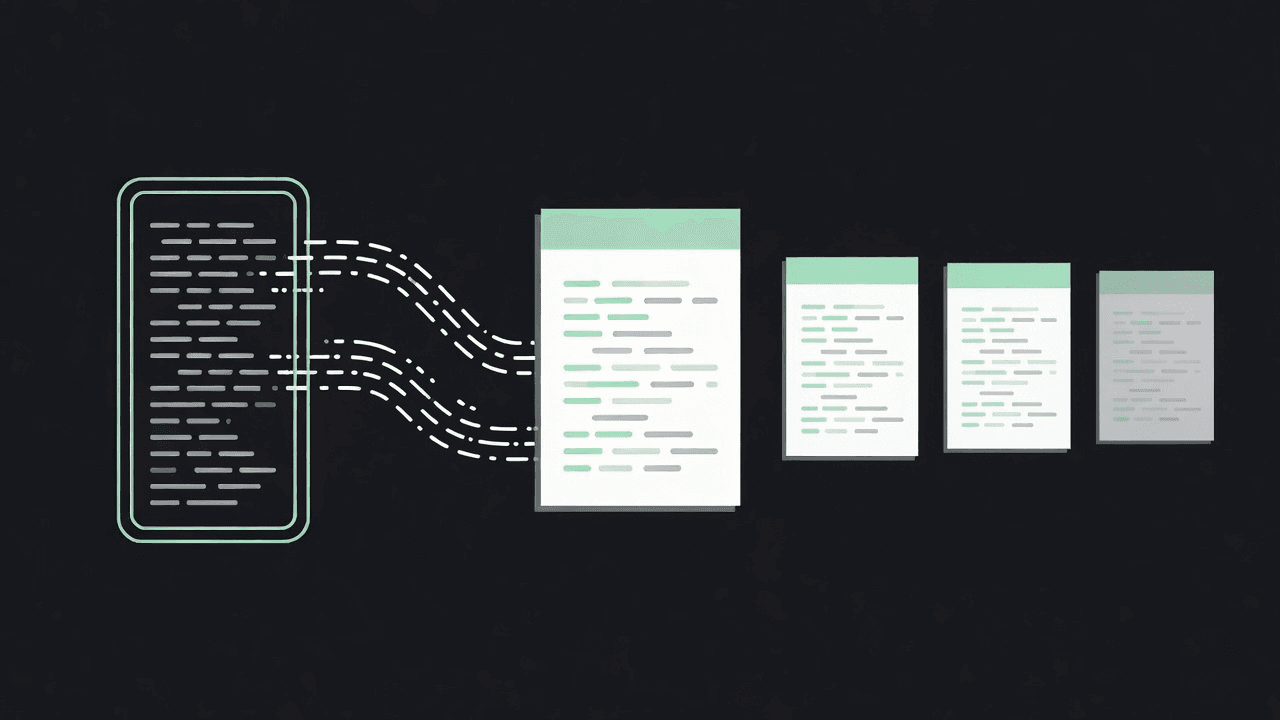
The TikToks worth keeping in a niche like AI are the ones where someone shows the order they do things in: how they set up a prompt, what they check before they trust an output, what they do when it fails. That order is worth keeping, and a transcript plus Claude can turn it into a skill you run on demand instead of a video you half remember.
Find the creators who teach a method
Start with people who show their work rather than react to announcements. In TikTok search, the phrasings that surface method videos are the ones that sound like instructions: "prompt workflow", "how I use Claude for", "my system for", "before and after prompt". Product news ages in a week. A method is still good in six months.
Once you have a few accounts, check whether the person repeats. Someone with five videos on the same workflow, each adding a step, has an actual system. Someone with one viral clip and forty unrelated ones was probably guessing.
Pick the video that earned its engagement
Save counts and long comment threads tell you more than view counts. People save what they intend to come back to, which is what a method video is for. Read the comments before you spend any more time: if the top replies are people asking how to do the thing, or arguing about a specific step, the video has real content in it. If the top replies are jokes, move on.
Extract the script
If you need the broader methods first, see how to get a transcript of a TikTok video.
Paste the video's link into shinmuscat's script tool and download a TikTok transcript as TXT (or copy from the page). Do this rather than typing notes while you watch. A method video hides its structure in the connective words, the "first", "only after", "and if that fails", and those are exactly the words you drop when you paraphrase from memory. The exact sequence is the thing you came for.
If the video has on-screen text the narration never says, note it separately. Creators often put the specific model name, the flag or the file path on screen and never read it aloud, so the transcript will have a gap where a detail should be.
Feed it to Claude and pull out the framework
Paste the transcript and ask for structure, not a summary:
Here is a transcript of a video where someone explains their workflow. Extract the exact steps in order. For each step, tell me what the input is, what the output is, and what decision the person makes before moving on. Mark anything they assert without explaining.
Ask for the unexplained assertions in particular. A 90-second video states conclusions because it has no room for reasoning, so the output will have several steps that read as rules with nothing behind them, and those are the parts you cannot copy blindly.
Make Claude do the research the video skipped
Take the unexplained assertions and have Claude check each one against documentation and other sources, with links. In practice this splits them into three piles: things that are correct and now have a reason attached, things that were true for an older model or an older version of a tool, and things the creator does out of habit that nothing supports.
This step is the difference between a skill worth keeping and a transcript in a folder. Video advice about AI tools goes stale quickly, because the models and the flags change underneath it, and the step is about to go into a file you run a hundred times.
Write it as a skill
A Claude skill is a folder with a SKILL.md file in it. Personal skills live in ~/.claude/skills/<skill-name>/SKILL.md, project skills in .claude/skills/ inside the repo. The file needs YAML frontmatter with a name and a description, and then the instructions in plain markdown:
---
name: hook-rewrite
description: Rewrites a piece of copy using the four-part hook structure. Use when the user asks to sharpen an opening line, a headline, or the first sentence of a post.
---

# Hook rewrite

## When to run
...

## Steps
1. ...
The description does the work that nothing else does. Claude reads it to decide whether the skill applies, so it has to say both what the skill does and when to reach for it. A description like "helps with writing" never triggers. One that names the specific job and the situation does.
Then turn your researched framework into the body. Keep the creator's sequence, since that was the thing worth taking, and replace their unexplained rules with the reasoning you found. Where a step is fragile and has to happen the same way every time, write it as a numbered instruction. Where it depends on the situation, write the decision rule instead and let Claude judge. Long reference material goes in a separate file in the folder so it loads only when needed.
Run it on a real job before you trust it
Use the skill on actual work and watch where it goes wrong. Usually one of two things happens: it does not trigger, which means the description is too vague, or it triggers and produces something generic, which means the body is a summary of the video rather than a procedure. Both are quick fixes, and both are invisible until you run it.
Credit, and the line worth not crossing
Learning a method from a video and building your own tooling around it is ordinary practice, the same as reading someone's blog post and using the approach. Putting the creator's name and a link to the video in the skill file costs you one line and makes the source obvious to anyone who opens it later, including you. For formal citation patterns, see how to cite a TikTok video.
Republishing their script as your own content is a different thing, and the transcript is not yours to post. Keep the framework, credit the person it came from, and let the research you added be the part that is yours.
Next step
Find one creator in your niche who explains a method rather than a product, pull the transcript of their best video with shinmuscat's script tool, and take it as far as the framework. Write the skill only if the framework survives the research. To scale past one video, see turn TikTok videos into a training library.
Try it on your own video
Paste a TikTok link and get the full transcript in seconds.