Turn TikTok Videos Into a Training Library
Shortlist TikTok training videos, export the transcripts, and build a searchable library your team and your AI can both read.
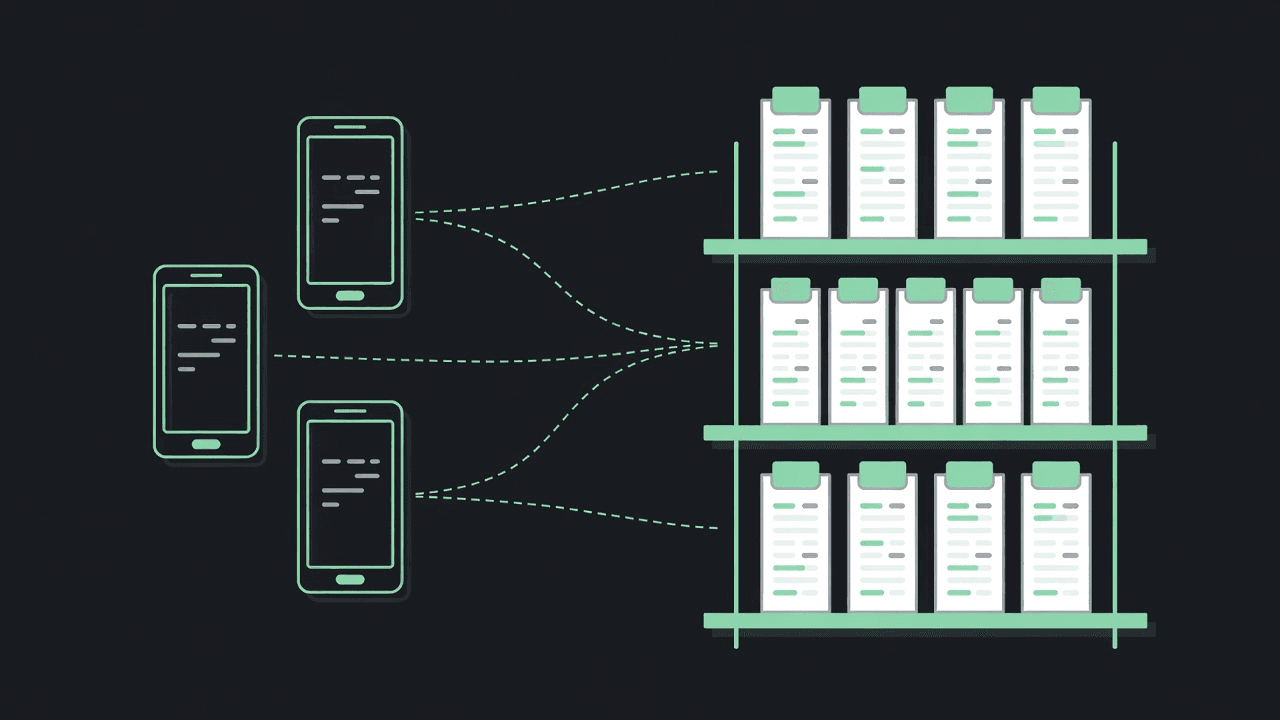
Most of what people know about doing a job well never makes it into a course. It gets posted instead, as a 60-second video by someone who does the work every day: the order they run a process in, the mistake that cost them a client, the setting everyone gets wrong. TikTok has years of that from practitioners in almost any field. The material is good. The format is the problem: video cannot be searched, quoted, skimmed or handed to a new starter, and it disappears from your feed within a day.
A transcript fixes all four at once. Here is how to turn videos you have already found useful into a library that a person can search and an AI can read.
Why this material is worth collecting
A training video made by an L&D team is written by someone who studied the job. A TikTok about the same job is usually made by someone doing it this week, under pressure to be specific in the first three seconds or lose the viewer. That pressure removes the padding. You get the actual step, the actual number, the actual thing that went wrong.
What you do not get is anything else a library needs. You cannot search inside a video for the word your colleague half remembers. You cannot paste 40 seconds of it into a document. You cannot check whether three creators said the same thing or contradicted each other. Those are all text problems, and they go away the moment you have the words.
Shortlist before you collect
A library of everything is a feed with extra steps. Keep a video only if it passes two tests.
First, does it demonstrate rather than announce? Product news and hot takes are worthless in six months. A method, a checklist, a worked example or a failure post-mortem holds up.
Second, is it specific enough to act on? If the video says "make sure your onboarding is solid," it teaches nothing. If it says "we moved the payment step to day three and churn in month one dropped," there is something to test, argue with and write down.
Export the transcripts
Paste each video's link into shinmuscat's script tool and export the transcript. For the get-the-words overview, see how to get a transcript of a TikTok video. You get three formats, and which you pick depends on what the file is for:
Plain text (.txt) is the transcript as paragraphs with nothing else in it. This is the one you want for anything an AI or a search index reads. The Copy button gives you the same plain text, which is faster when you are pasting straight into a chat or a document.
SubRip (.srt) and WebVTT (.vtt) are the subtitle formats. Both carry a start and end time on every line, so the text stays anchored to the moment it was said. Use these when the video itself is part of the training and someone needs to jump to 0:42, or when you are loading the material into a player or a course tool that reads subtitles.
For a library, most entries want the plain text file, plus the SRT for anything where the demonstration matters more than the explanation.
Build the repo
A folder of downloaded .txt files is still a pile. What makes it a repo is that every entry looks the same. One markdown file per video, named after the topic rather than the video id, with a short block of metadata at the top and the transcript below it:
---
source: https://www.tiktok.com/@creator/video/123
creator: "@creator"
captured: 2026-09-12
topic: onboarding
claims_checked: partial
---

## Summary
Three sentences on what this video actually teaches.

## Claims to verify
- Moving the payment step to day three cut month-one churn (no number given for the baseline)

## Transcript
...
Four things earn their place here. The source link, so anyone can watch the original and credit is never lost. The creator, so you can see when one person is over-represented in your library. The date, because advice about tools goes stale and you need to know how old a claim is. And the summary, because it is the thing people actually read when they are scanning.
Keep the folder structure flat and topical: onboarding/, pricing/, cold-outreach/. A file that could sit in two folders belongs in one, with the other topic named in the frontmatter. Add a plain README.md at the root that lists the topics and what each one covers, and put the whole thing in git so you can see what changed and when.
Make it readable by an AI as well as a person
Plain markdown with consistent frontmatter is already close to ideal for this. Models read it without conversion, the frontmatter gives them the metadata as text rather than as something they have to infer, and headings let them find the relevant section of a long file. Nothing here needs a database.
Once the library exists, it becomes context you can point at. Ask for the steps three different creators gave for the same task and where they disagree. Ask what every video in pricing/ assumes but never says. Ask for a first draft of an internal guide built from the six best entries, with the sources listed. This is the payoff for keeping a consistent shape: the questions work across the whole library instead of one file at a time.
If you later want retrieval over a larger collection, the same files feed straight into it. One topic per file, short sections and a summary at the top are what make chunks retrievable, and you get them by writing the files properly in the first place.
Verify before it becomes training material
The gap between an interesting video and training material is a verification step. A claim that entered your library because a confident person said it in 45 seconds will get repeated by a new starter as company knowledge within a month.
Mark each entry as checked or unchecked in the frontmatter and work through the unchecked ones. Some claims will hold up and now have a source attached. Some were true for an older version of a tool. Some are one person's habit with nothing behind them, which is still worth keeping as long as the file says so.
Credit and where the line sits
Keeping transcripts in an internal library, with the creator named and the video linked, is ordinary research practice. Building a public page out of someone's script, or selling a course assembled from other people's transcripts, is not, and the fact that the text came out of a free tool changes nothing about who wrote the words.
The safe version is simple. Credit every entry, link every source, keep the library internal, and make the summaries and the verification your own work.
Next step
Pick the five videos you have already sent to a colleague this year, run each one through shinmuscat's script tool, and write them up in the format above. Five good entries with sources and summaries are worth more than fifty saved videos nobody can search. For a single method video turned into a runnable skill, see turn a TikTok video into a Claude skill.
Try it on your own video
Paste a TikTok link and get the full transcript in seconds.